

Zoning determines what businesses can open, how buildings can be reused and where housing can be built. For approximately 18 months, CEIC advocated for changes that would give Central Eastside businesses and property owners more options to grow, reinvest and bring vacant spaces back into use.
On November 12, City Council approved the Central City Code Amendments Project (CCCAP). The package includes practical improvements we supported, but the City did not advance our central request: expanding Central Employment zoning in strategic parts of the district. You can read our full recommendation on our Land Use Committee page.
What we asked for and why
Central Employment zoning allows a broader mix of businesses and housing than industrial zoning. We proposed expanding it along MLK and Grand toward OMSI, Hawthorne and Madison, and properties near Water Avenue.
The purpose was to create more opportunities for jobs, building reuse and mixed-use development in well-connected locations, while planning for infrastructure needs and retaining existing businesses.
Our Land Use & Urban Development Committee submitted letters, developed maps, met with City representatives and testified. Although our recommendations directly addressed the project’s goals of business growth and economic recovery, they were not brought forward for the coordinated review we requested.
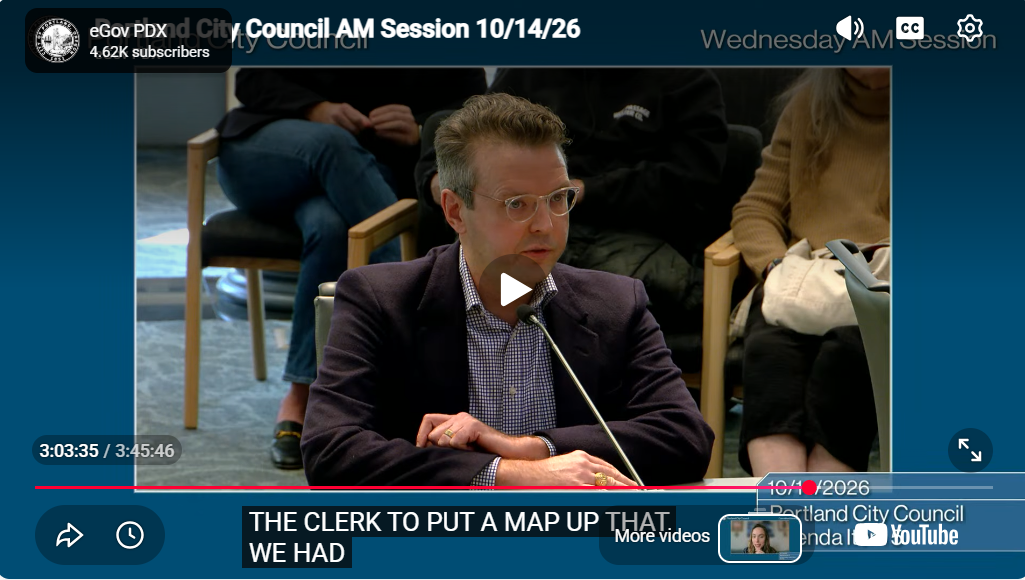
Land Use Committee member Will Short testified at Council, emphasizing that our proposal was primarily about jobs and reinvestment. He asked the City to approve the ready changes and establish a separate review of CEIC’s recommendations. Watch Will’s testimony starting around the 3:03:09 mark.
Important Wins
The adopted package delivers several important wins for the Central Eastside:
more room for retail businesses,
expanded temporary parking options for customers and employees, and
more flexible building requirements that can help projects move forward.
While CEIC advocated for these changes to make it easier to operate a business, activate vacant spaces and invest in the district, our broader zoning proposal and request for a coordinated follow-up review remain unfinished work
What’s next
We will explore whether the Inner Eastside Project offers a path to advance these recommendations and create a more connected district, with zoning that reflects how businesses operate and gives them room to grow.
Have comments or ideas to share with the CEIC Board and Land Use Committee? We’d love to hear from you at carolyne@ceic.cc.
Thank you to our Land Use Committee and everyone who contributed expertise and testimony. We will continue to advocate for changes to support a well-connected and economically vibrant business district.